

It’s the law of any camera format that you have to have a 50mm ish equivalent lens, i.e. one that has the same field of view, roughly, as a 50mm lens on a full-frame (35mm film) camera. We can have an extremely unedifying debate about what a “Normal lens“; the short version is it should, in a way, look a bit like normal vision. A not terrible way of thinking this is when you see a scene in the real world, does lifting the camera up to your eye show you roughly the same scene, or does it show you a much more zoomed in or zoomed out version than your eye saw.
For a long time 50mm has been seen as roughly this. Those who listen to my prattle will know I prefer 40-45mm, but it’s near enough. On the Micro Four Thirds system this means a lens with a 25mm focal length will have the same appearance as a 50mm lens on a full-frame camera.
So I had to get one.
| Mount | Micro Four Thirds |
| Weight | 136g |
| Purchased | 30 January 2024 |
| From | MPB |
| Price | £139 |

Since I purchased someone seems to have tipped mpb off that this is a pretty good lens, and that £139 was a very good price, so now the same condition goes for about £219, but it’s still a great deal for that price I think.
I’ll say this twice here to stop myself becoming too boring, but this lens is small. It’s light and it really is pocketable. When I came to take the photos for this post, I couldn’t quickly find the lens; it was buried in the bottom of my camera bag and I’d overlooked it. Not to skip ahead too quickly, but it’s also really good. This is one of the lenses that just makes the Micro Four Thirds format; you can stick it on a big camera like the G9 Mark 2, or a small camera like the GX800 and either way it takes just lovely photos.


The Lumix 20mm f/1.7 is an obvious point of comparison (which I’ll write about soon). The 20mm is even smaller (and is, in my opinion, a better focal length), and it’s a bit wider, but one thing that the Olympus 25mm definitely has going for it is that the focusing speed and sound. The 20mm sounds, to be charitable, like it’s having a tough time. The 25mm is basically silent and almost immediate.
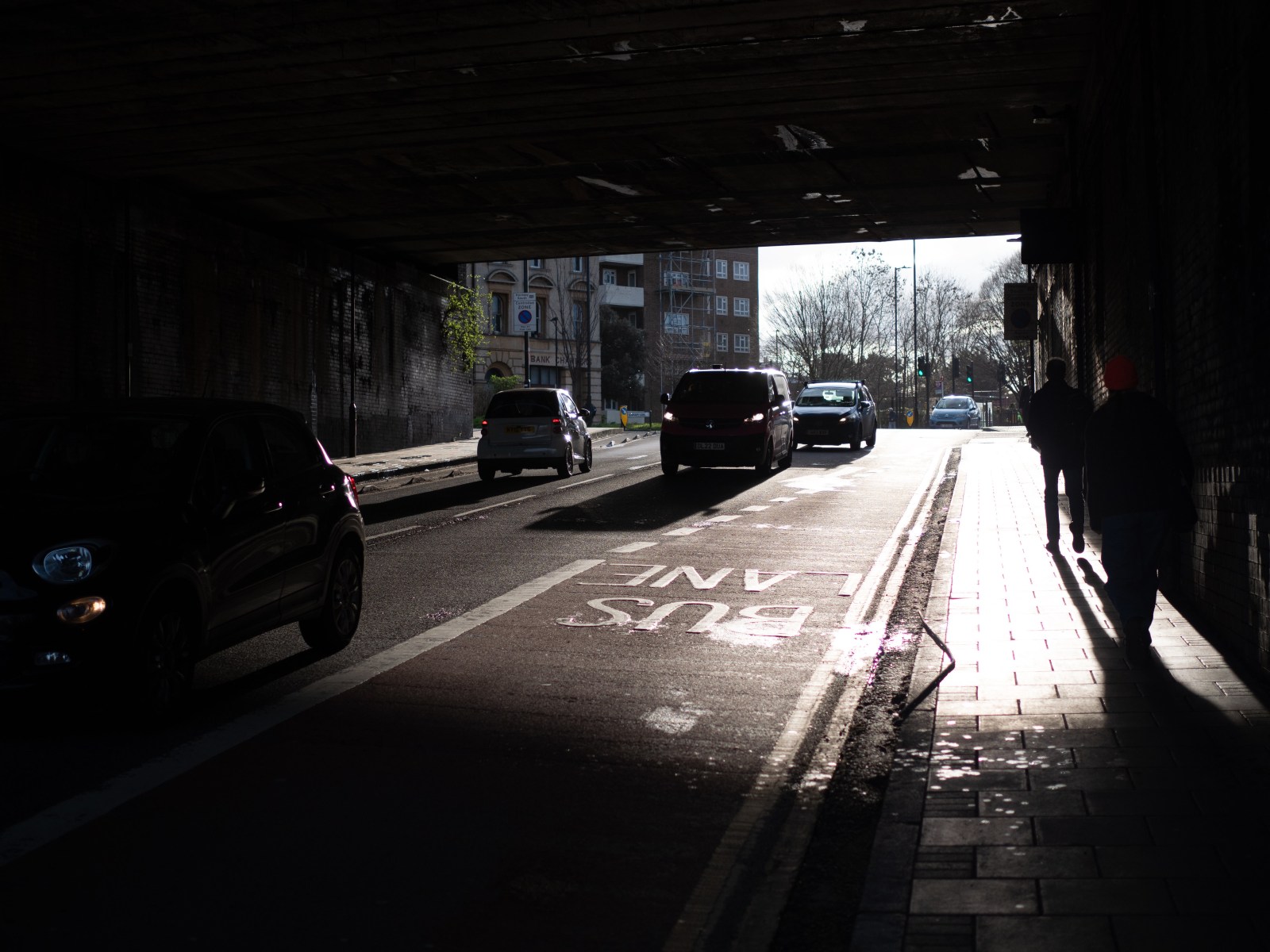
It’s a great performer in terms of distortion and flare. What it isn’t as good at is fringing. I’ve seen reviews online say it has none (including this Digital Camera World review which has a certain…style to its example photos). I have not found this to be true – see this image below (which I’ve intentionally not corrected). Check out the puddle on the road near the Bus Lane road markings; it wasn’t purple in real life. This is pretty easy to fix, and you’ll see the lens holds up well here for contrast and detail despite the huge range of light.
Let’s get my final slight criticism out the way. The colours are definitely not bad from this lens, but they can be a bit understated. It’s quite “natural”, which gives you a lot of scope for playing around with after taking the photo, but I’ve seen lenses with more colour pop straight out of the camera. The below three go in order from least to most saturation. I’ve added some notes to each photo about its level of processing. They’ve each had little or nothing done to saturation or vibrance (the first had saturation boosted because the original image was too contrasty, and knocking contrast down flattens colours unless you correct with saturation).



Where this lens just comes into its own is night photography. It’s inconspicuous, it has a wide aperture, it’s sharp and it’s fun to use. I loved taking photos in Japan with it; I wish I’d used it more.



I’ve saved you from even more photos (in this post) of my friends and family, but 50mm equivalent lenses tend to be good for pictures of people. Remember that this is equivalent in terms of field of view to a 50mm lens, but it is still a 25mm lens, so you do get some of that wide-angle effect on people, but I wouldn’t usually hesitate to take a photo of people at 24mm on my full-frame Sony, so definitely don’t let this put you off. For the curious here are one / and another photo of people with this lens.
In terms of build quality, this lens is competent with no frills. You have a metal mount and an otherwise mostly plastic construction. There is not weather sealing. There is no stabilisation. There is a (really quite good) focus ring and…that’s it. It apparently comes with a hood, but my one didn’t. I’ve had no problems in this regard.

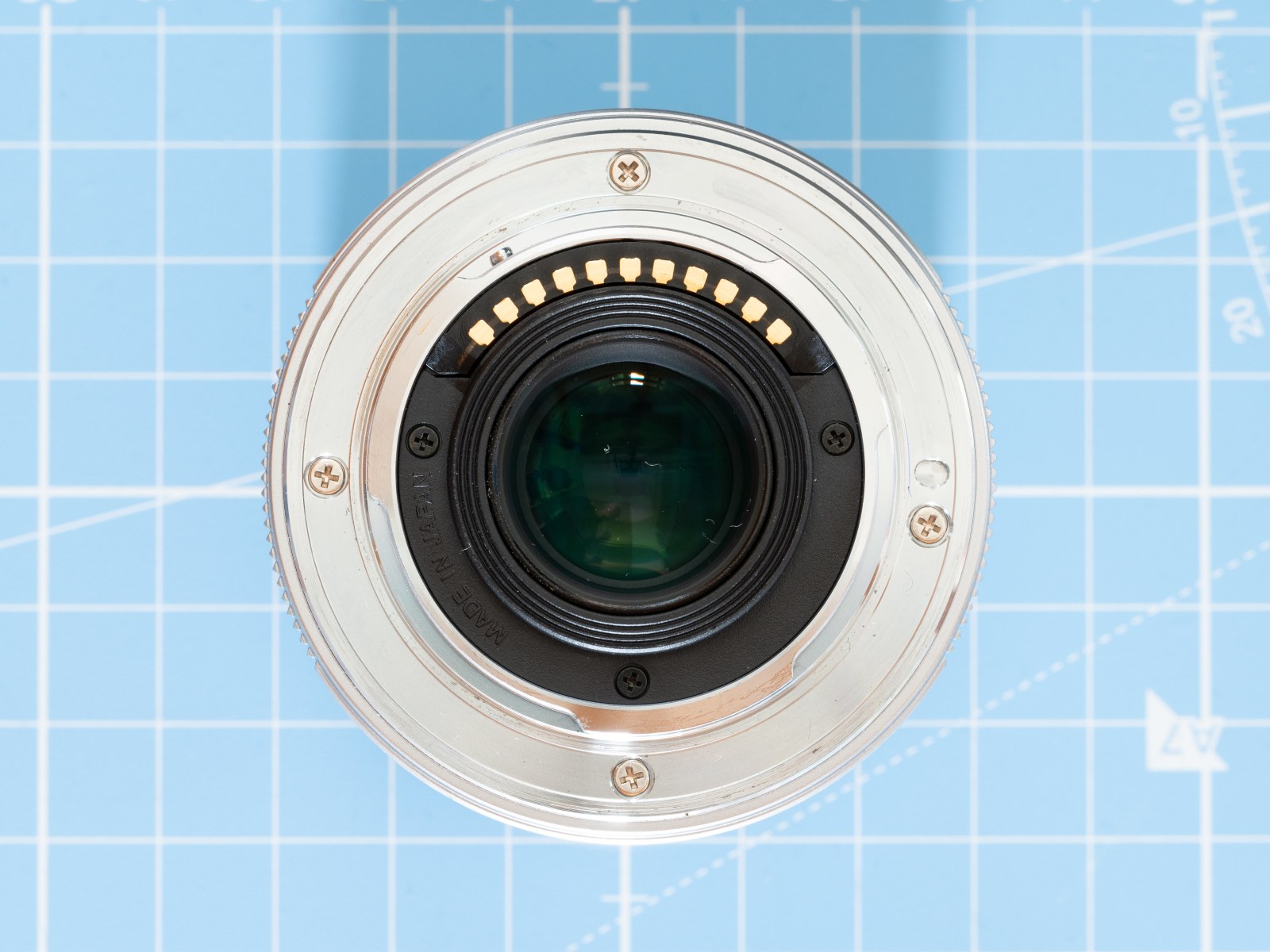
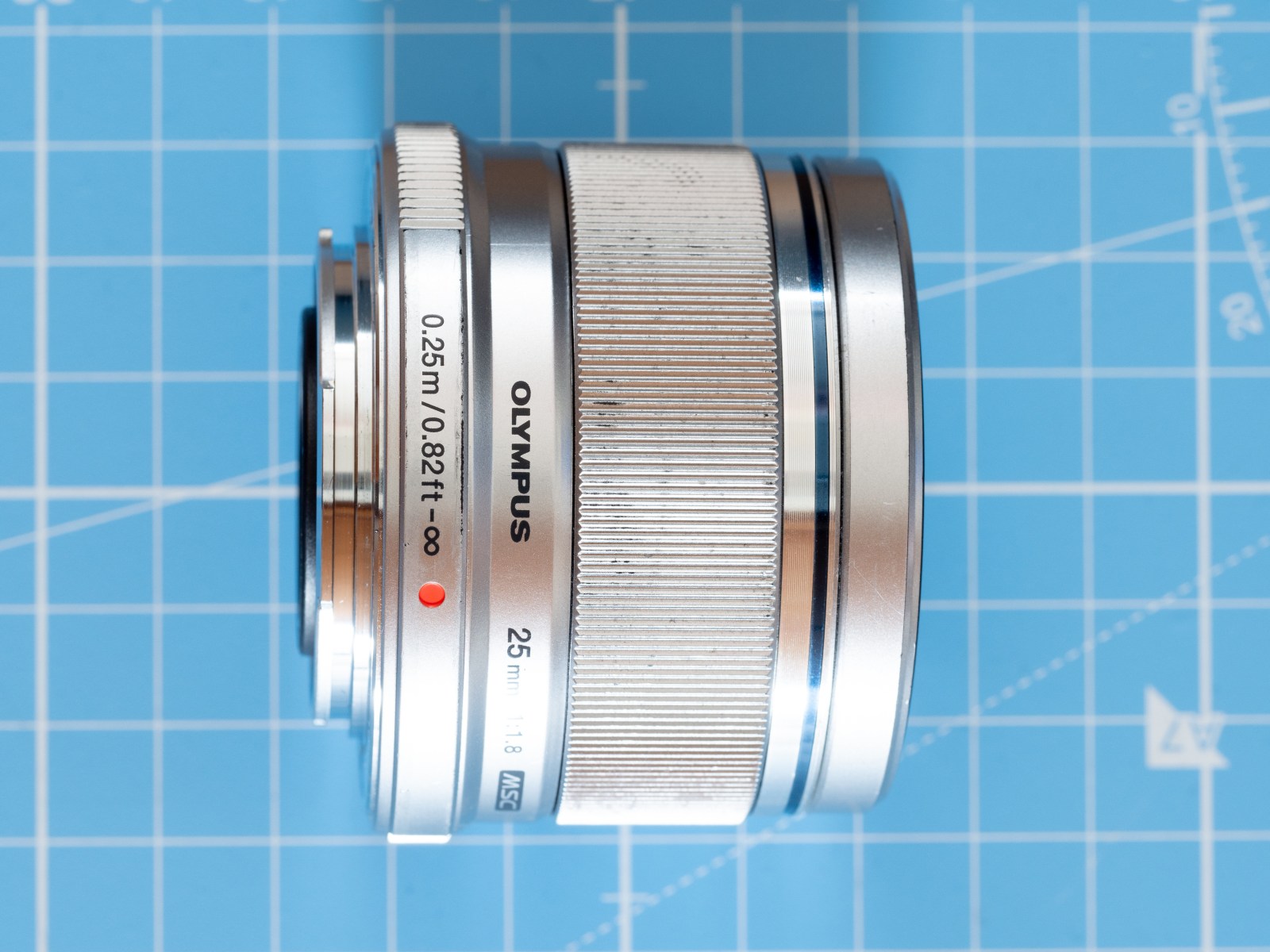
I really like my Samyang 50mm f/1.4 FE II that I’ll write about soon. For such a wide lens it’s pretty easy to take out. But at the very least to use it I need my Sony A7RIII (657g) and the lens itself (420g and 8.9cm long). Even if I ignore my GX800, I can take this Olympus 25mm out on my E-P7 and the total camera+lens combination is 473g. This is huge deal, and the physical size of the two is way smaller than the Sony+Samyang combo. Will I get as the dreamy bokeh of the f/1.4 full-frame lens? No. But I do get great images that I otherwise might not have a camera for.
If you really want something spectacular, Olympus do a f/1.2 version of this lens for about £800 and 410g. Lumix do a 25mm f/1.4 for about £570 which is 200g. I imagine the Lumix, particularly, is wonderful. But this lens is so much cheaper, quite a lot lighter, more portable and because of that I have it and I’m using it. I highly recommend it.


See the album of this lens’ photos on Flickr with the above photos.

Leave a comment